
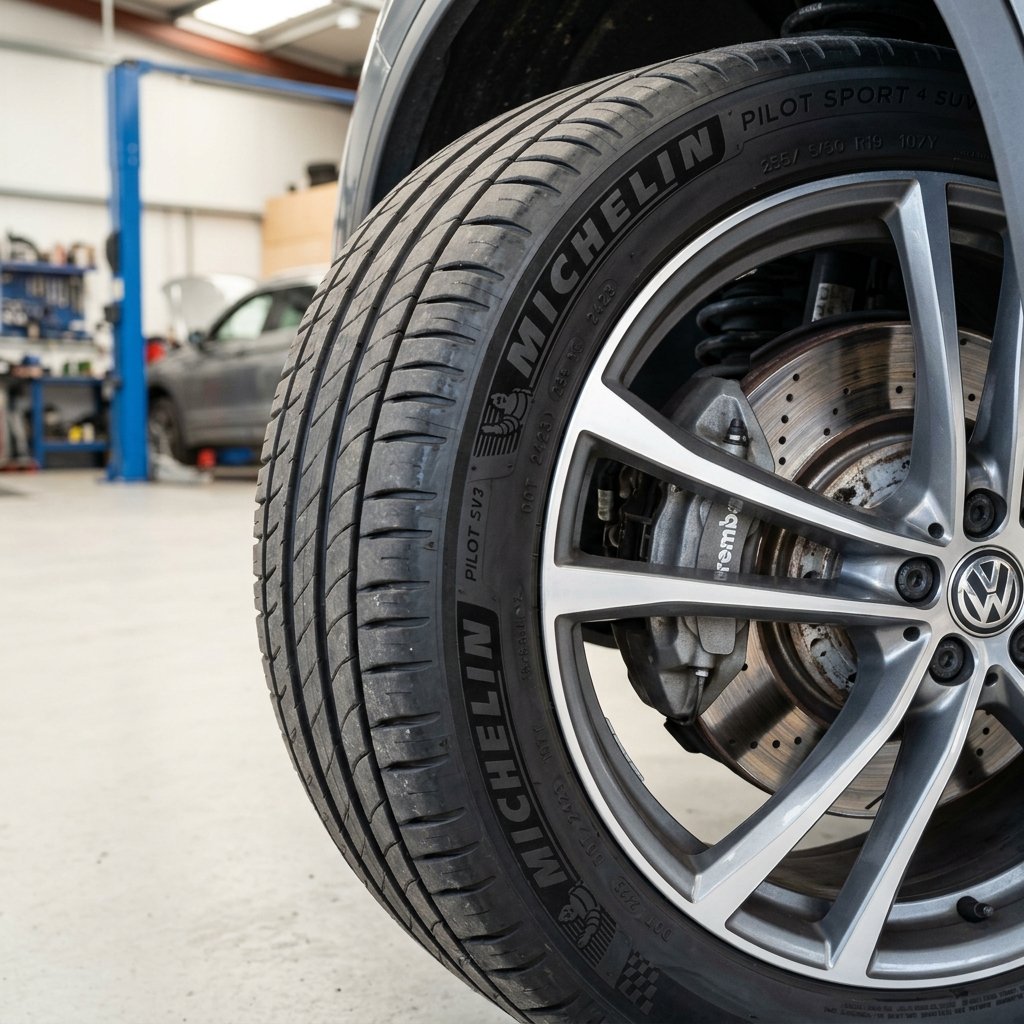
The MOT test is a rigorous safety inspection of your vehicle. During the test, a DVSA-certified mechanic will check over 68 individual mechanical and structural points. It is important to note that the MOT is **not** a substitute for an engine service, and it does not check internal mechanical components like gearboxes, clutches, or engine internals.
Core MOT Inspection Categories
| Inspection Area | Specific Components Inspected |
|---|---|
| Body & Structure | Engine mountings, chassis integrity, structural corrosion, secure doors, bonnet, boot lid, and towbars. |
| Fuel System | Fuel tank safety, fuel pipes, cap seal integrity, and exhaust system mountings. |
| Braking System | Brake pedal travel, servo assist, pads, discs, lines, brake pipes, handbrake efficiency, and ABS sensors. |
| Steering & Suspension | Steering wheel play, steering column, shock absorbers, suspension springs, ball joints, and wheel bearings. |
| Tyres & Wheels | Tread depth (minimum 1.6mm), tyre sizing, structural condition, TPMS tyre pressure monitor warning lights. |
| Lighting & Signalling | Headlamp aim, indicators, hazard lights, tail lights, brake lights, fog lamps, reversing lights, and registration plate illumination. |
| Driver Visibility | Windscreen chips/cracks, wiper blades, windshield washer fluid, side mirrors, and rear-view mirrors. |
What the MOT Test Excludes
Many drivers mistakenly assume the MOT checks everything. The test does **not** evaluate:
- The engine's internal mechanical components.
- The gearbox, clutch, or drivetrain wear.
- Worn clutch plates or brake pads that still meet minimum thickness limits.
- Car fluids, engine oil levels, or coolant condition.